
Most teams do not wake up one morning looking for “fractional CloudOps.”
They usually arrive there after a more familiar pattern: AWS has become important to the business, the environment has grown more complex, and the internal team has more operational work than it can reasonably finish.
The bill needs attention. IAM needs cleanup. Provisioning is inconsistent. A migration or new product launch is creating architecture questions. Everyone can see the backlog, but nobody has enough time or senior AWS focus to keep it moving.
That is the practical case for Fractional CloudOps.
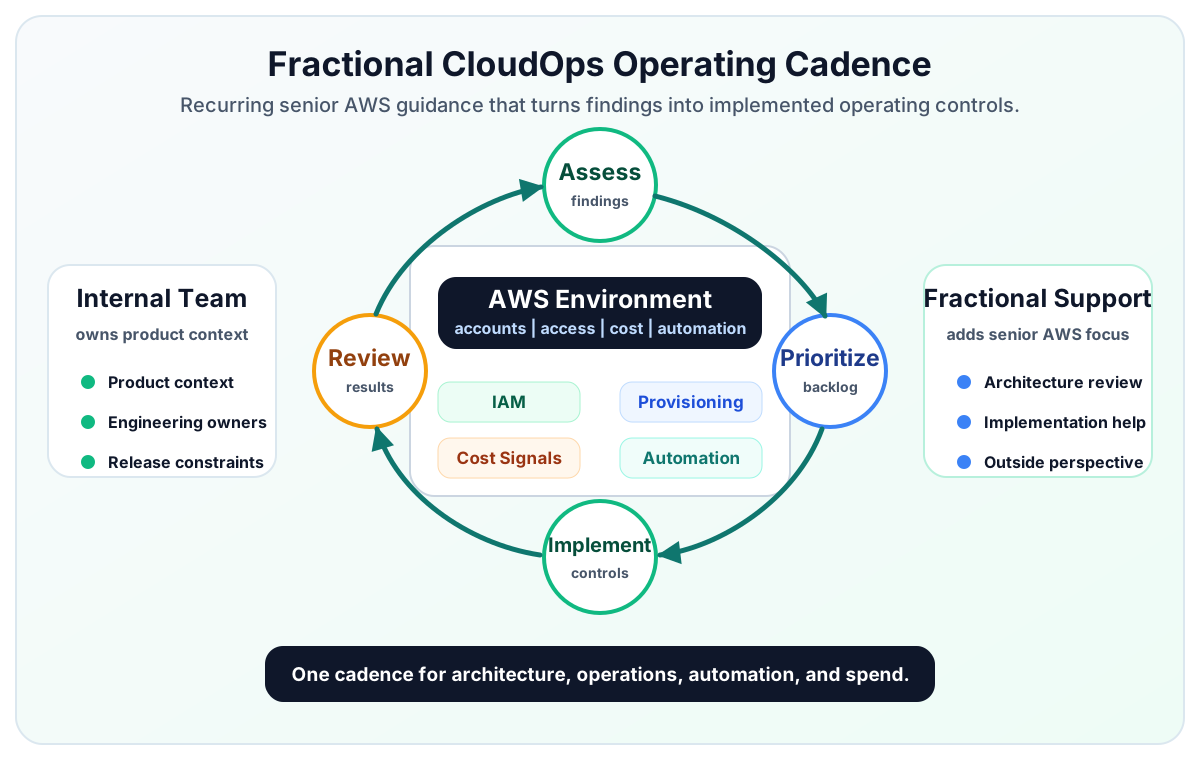
The cadence is the point. Fractional support should help the team assess the environment, prioritize the backlog, implement the right controls, review what changed, and repeat that loop as AWS usage evolves.
A working definition
Fractional CloudOps is a recurring support model that gives your team access to senior AWS operations, architecture, automation, and cost-control expertise on a part-time basis.
It sits between two common options:
- a one-time consultant who produces recommendations and leaves
- a full dedicated CloudOps or platform team that owns the operating model every day
Fractional CloudOps is for the middle ground. The environment needs steady senior attention, but the business may not need, want, or be ready to hire a complete in-house team.
In practice, that support usually covers work like:
- architecture review and migration planning
- IAM structure, account design, and permission boundaries
- infrastructure-as-code and provisioning patterns
- operations automation, scheduling, cleanup, and runbook improvements
- tagging, ownership, governance, and cost-control standards
- recurring backlog review and implementation follow-through
The exact shape changes by team. The important part is the cadence: Fractional CloudOps is not a one-off report. It is a way to keep experienced AWS judgment close enough to influence real decisions.
Why the model exists
Cloud operations work is rarely constant.
One month, the urgent problem is non-production waste. The next month, it is IAM drift. Then a new product launch needs an environment pattern. Then finance needs a cleaner explanation of why spend changed. Then engineering needs help deciding whether to automate a process, change an architecture, or leave something alone.
That uneven workload creates an awkward hiring problem.
A full-time senior CloudOps hire can make sense when there is enough daily work, budget, and management structure to support the role. Many teams are not there yet. They still need the experience, but they need it in focused bursts and recurring review cycles, not necessarily as another permanent seat on payroll.
Fractional CloudOps gives those teams a different path: bring in the senior judgment, use it where it matters, and keep the operating model moving without pretending every AWS problem requires a new department.
How this differs from a managed service provider
Fractional CloudOps is not the same thing as a generic managed service provider.
An MSP is often built around monitoring, tickets, routine administration, and support coverage. Those can be useful services, but they are not the same as senior AWS operating strategy.
Fractional CloudOps is more targeted. It is usually concerned with questions like:
- Are we building this environment in a way the team can actually operate?
- Which operational fixes should happen first?
- Where is automation worth the effort?
- Which cost problems are symptoms of deeper architecture or ownership issues?
- What should be handled internally, and where would outside implementation support speed things up?
That makes it a good fit alongside an internal engineering team, an MSP, or a small platform function. It does not have to replace any of them. It can give them a clearer operating path.
Why outside perspective helps internal teams
Existing teams often know more about the environment than any outside partner will on day one. That is true, and it matters.
But being close to the work has a cost.
Internal teams get used to the weird parts of an environment. They know which exceptions are historical, which scripts are fragile, which tags are inconsistent, and which manual process everyone quietly works around. Over time, those conditions can start to feel normal.
An outside CloudOps partner brings pattern recognition from other AWS environments. More importantly, they create a forced moment of prioritization.
Instead of treating every issue as equally urgent, the work becomes more concrete:
- which problems create the most operational risk
- which fixes have the clearest cost impact
- which changes can be made safely now
- which backlog items are blocked by ownership, access, or architecture decisions
- which automations are worth building because the manual process will keep failing
That outside perspective is not about making the internal team look bad. It is about giving the team a second senior set of eyes and a practical way to move the backlog forward.
Why this matters for AWS cost control
Cloud cost problems often look financial from the outside, but many of them are operational underneath.
Idle resources are an ownership problem. Poor tagging is a governance problem. Oversized infrastructure may be an architecture problem. Unused environments left running all weekend are usually an automation problem.
FinOps gives teams a useful language for accountability. The FinOps Foundation’s principles emphasize collaboration across finance, technology, product, and business teams, along with engineering ownership of cloud usage. That lines up with what strong CloudOps work looks like in the real world: cost awareness has to reach the people designing, provisioning, and operating the systems.
AWS makes a similar point through its Well-Architected guidance. The Operational Excellence pillar focuses on how teams organize, observe, operate, and improve workloads. The Cost Optimization pillar pushes teams to manage cloud financial decisions as usage scales.
Fractional CloudOps connects those ideas to implementation. It helps turn “we should improve governance” into a sequence of AWS changes, review habits, and automation work that can actually land.
What a good Fractional CloudOps engagement should include
A useful engagement should not feel like a vague advisory retainer.
It should create a repeatable operating rhythm. For SkySaver, that usually starts with a diagnostic so the first conversation is grounded in the actual AWS environment, not assumptions. From there, the work can move into an implementation sprint or a recurring CloudOps cadence.
The recurring model should include:
- a short list of priorities, not an endless backlog dump
- concrete AWS implementation work when the team needs execution help
- clear ownership recommendations for tags, accounts, roles, environments, and schedules
- architecture guidance before expensive patterns become permanent
- automation opportunities that reduce manual cleanup
- cost-control reviews that connect finance pressure with engineering reality
The best version of the model leaves the internal team stronger. It should clarify decisions, transfer working patterns, and reduce the number of operational problems that depend on memory or heroics.
When Fractional CloudOps is a good fit
Fractional CloudOps tends to make sense when:
- AWS is important enough that poor operations would hurt the business
- the internal team is capable but already overloaded
- cloud spend, governance, IAM, or automation work keeps slipping behind
- leadership needs progress without waiting for a full hiring cycle
- the team wants outside validation before a migration, launch, or architecture shift
- there is a real appetite to implement changes, not just collect recommendations
It is also useful for existing platform or DevOps teams that want a second opinion. Sometimes the value is not extra hands. Sometimes it is having an outside senior operator challenge assumptions before the team commits to a costly direction.
When it is probably not the right fit
This model is not for every AWS account.
If the environment is tiny, mostly static, and inexpensive, a full recurring CloudOps relationship may be more than the situation needs. If the main need is 24/7 ticket coverage, an MSP or support desk may be a better match. If the organization is not willing to make changes after findings are presented, a diagnostic alone may be the more honest starting point.
Fractional CloudOps works best when there is real operational complexity and enough willingness to act.
The practical takeaway
Fractional CloudOps is a way to get senior AWS operating help without building a full dedicated team before the business is ready.
For some companies, it becomes a bridge: recurring help until the internal platform function matures. For others, it stays as an outside layer of review, implementation, and cost-control discipline. Either path is valid.
The core idea is simple enough: keep AWS architecture, operations, automation, and spend moving in the same direction.
That is where the model earns its place. Not as another dashboard. Not as a pile of recommendations. As a steady operating cadence that helps the team make better AWS decisions and finish the work that keeps getting postponed.
For SkySaver, the cleanest first step is still the diagnostic. It shows where the environment needs attention, whether an implementation sprint can land the highest-value fixes, and whether ongoing Fractional CloudOps support is worth putting in place.